Fayetteville's Best Bat Removal
We've been voted Fayetteville's best bat removal company the past two years!
Get in touch
Bat Experts
Rapid Response
Trained & Educated
Licensed & Certified
About Fayetteville Bat Removal
Welcome to fayettevillebat.com. We are the only qualified bat removal company in Fayetteville, North Carolina. There are thousands of people who have had that horrible feeling of waking up during the early hours, and heard the sound of scratching or movement coming from the roof space above them. Naturally, this is very alarming, so you can call us 24/7 to discuss the situation and our teams are trained to be understanding and compassionate, as we know how concerning these discoveries can be. Whether it is rats, raccoons, bats or another species, our team can give you reassurance and help to narrow down the species it could be based on the signs you may have seen or heard. We can usually get an animal removal expert to you the next day so that they can identify the species and start the work of dealing with the animals. Different species will require a different approach to remove, with bats for example being completely different to rat removal. Because the bats are flying creatures, we use exclusion methods so that the bats can fly out of the roof space, but then have a layer of netting that will stop them from getting back in again. Because of the potential for disease transmission with animal droppings, all our animal removal experts are able to carry out all of the cleaning work, and dispose of any droppings or guano safely. The final service available is to fully fumigate the roof space with a disinfectant that will ensure that every surface within that space is safe and doesn't pose any risks to everyone in the house. We operate 24-7-365, so don't hesitate to call us at 910-208-0296 to discuss your bat problem and schedule a fast appointment.
Residential
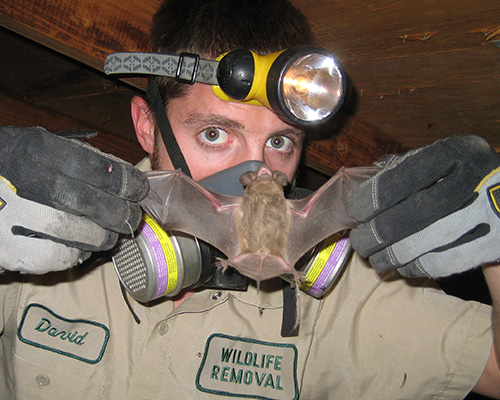
We are experts at removing bats from residential properties. Whether you have a single bat trapped in your house, a colony roosting in your attic, and/or various other problems, there is no need to worry! During our removal process, we make sure to inspect your entire home carefully, tracking down all the entrypoints bats are using to invade your place. Next, we perform a process called live exclusion (where no bats are harmed and all exit your property), then seal all entry holes completely shut. We also take care of the cleanup process after, so your home is safe and clean!
Learn MoreCommercial
Besides residential areas, we also have a wealth of experience removing bats from commercial properties! We begin by investigating the area for possible bat entrances, covering holes even as small as 1/4 of an inch. Through our live exclusion process, bats leave the building through one-way exits, and we seal up every hole afterward. Once the bats have been removed, we perform a cleanup process. This includes dealing with guano, replacing damaged insulation, and decontaminating the place.
Learn More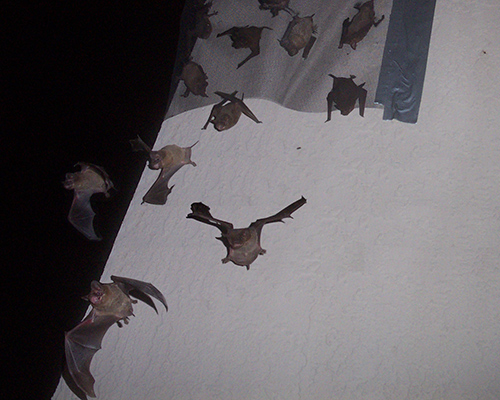
Contact us for bat removal today!
What Our Customers Say
I had a bat flying around in my house at 9pm, and CITY bat removal came right out and caught it in a net.
Sarah Lakewood
I had an annoying colony of bats stuck in my attic for a while before I finally decided to call for help. They were able to quickly and thoroughly solve the problem!
Brandon Chung
They did a great job clearing my attic of bats and didn't hurt any of the creatures.
Charlotte Demers
The technicians at CITY Bat Removal are skilled, professional, and know exactly what they're doing. Would highly recommend.
Mark O'Connor
My house stank of bats and their guano inside my wall. CITY Bat Removal not only removed the bats, they also got rid of the smell!
Alexis Ramirez
.jpg)
All About the Little Brown Bat
The little brown bat is the most common type of bat in North America. It is something most people have seen at some point, maybe without even realizing it.
You can find it all the way from Canada to Mexico, living in mostly the same types of locations. For the most part, the basics of this animal does not change no matter where it lives.
Wherever you see it, its appearance and habits and habitat will largely remain the same. Whether you are curious or have little brown bats around your home, there is a ton of basic information about them to learn.
Appearance
As you might have guessed by the name, these are little brown bats – literally. They are little and brown, exactly what you would imagine when you hear that name.
Their faces are what you would expect from a bat, with a sloped and protruding snout and plenty of sharp little teeth.
As they are small bats, their wings are not that big, either. They are, at most, around 10 inches, though some bats may have smaller wings.
Life Cycle
Little brown bats will live for up to ten years, or around that amount of time. There are various factors that can affect their life span, including predators. As a small animal without a lot of natural protection, they make for perfect prey. Various types of predator animals, including birds, will go after them for a quick meal.
After mating season, the bats will give birth to a single baby in a nursery. Nurseries are large groups of mother bats giving birth to and nursing their young. In these nurseries, you will see a mass of bats all huddled up together.
They take care of their young for a short amount of time. After a few weeks, the young are able to fly on their own and begin exploring.
Habitat and Diet
The exact diet of the little brown bat depends on where it is, but the basics remain the same. They eat whatever insects they can find around them. This includes gnats, wasps, moths, and whatever other insects it can find.
Since bats generally live near water, they have quick access to local insects. During winter, when there are few insects around, they will move in to caves and other enclosed areas to sleep for long periods at a time.
Little brown bats live a simple life to themselves, wherever they are around the globe. These small insectivores pose minimal risk to others and spend most of their time looking for food.